

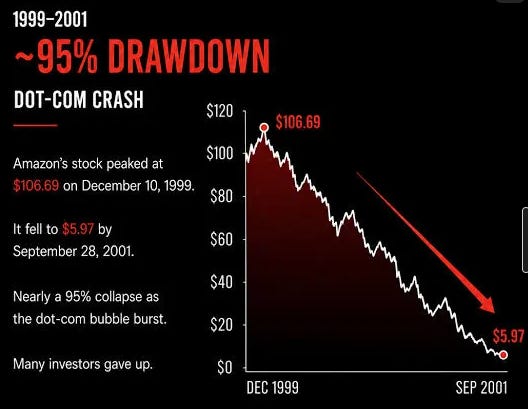
Jeff Bezos has distinguished between the inevitable and the unchanging. Some outcomes are coming because the underlying forces are too strong to stop. Amazon, looking backward, was one of those outcomes.
In its early years the company did not earn any profits. In fact, they lost money. A lot of money. When the Dot-Com bubble burst, the stock completely collapsed. Many observers decided the story was finished. They saw an online “bookseller” that had run out of momentum.
They did not see the infrastructure being built underneath the losses.
Gold has experienced its own sharp decline. It traded above $5,500 about ten months ago. After the start of the Iran war it fell, and it has now dipped below $4,000. The speed of the drop has convinced many that the move is over.
The parallel is direct. Amazon’s stock price was crushed while the company continued to build. Gold’s price has been crushed while the macro conditions that support it remain in place and continue to swell.
Inevitable does not mean the path is always smooth. Rather, it means the destination is set by forces larger than any single correction. Gold is that kind of asset for the owner who can see past the current price and market noise.
How the Smart Money Is Paying Attention
How did Amazon survive years without profits and a brutal stock crash to become one of the largest companies in the world?
Why does gold’s fall from above $5,500 to below $4,000 resemble that earlier period of doubt about Amazon?
And why do the macro forces already in place make a significantly higher gold price inevitable for the patient holder?
Amazon looked finished to most after the Dot-Com bust. They weren’t earning profits, Dot-Com was no longer in vogue and the investment herd had left the building. But Amazon was far from finished and Jeff Bezos had a long-term willingness to be misunderstood. Now gold looks finished to many people. The conditions say otherwise. So, let’s dig in…
