

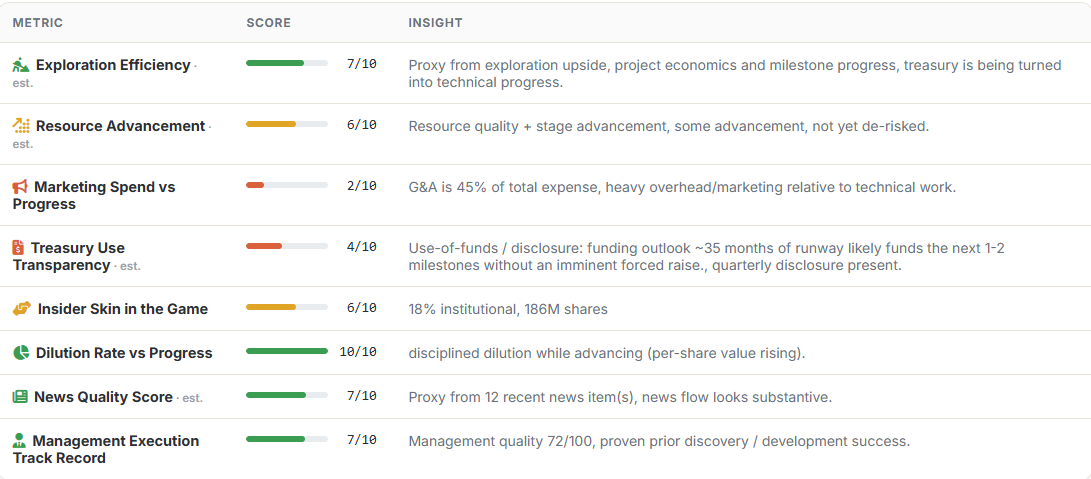
Most people now have an A.I. window open while they look at mining stocks. That is not a small change. It is the new default. Type a ticker, ask for the resource, the mine life, the valuation, the risks, and a buy or sell recommendation; and in 15 seconds you get an answer that sounds like real work and a real outcome. Who needs the experts or real software anymore? That is the trap.
A large language model such as ChatGPT, Claude, or Gemini is a reasoning engine trained on text. It is not a mining database. It does not log into SEDAR or EDGAR. It does not pull the current technical report, the latest warrant table, the last financing, the hedge book, or this quarter’s cash. It predicts the next likely sentence. Everyone needs to understand what they are really using.
When the public record is messy, incomplete, or recently changed; which is the normal condition in junior mining, the model will still answer. It will just answer with confidence it did not earn.
MineVantage was built for the opposite job. It connects through multiple APIs to many separate mining, market, and company data sources, then structurally assembles that information so the application and its A.I. can analyze a stock from actual filings, technical data, and market inputs. Its the order of operations that’s important.
This is a critical distinction and why it creates an advantage for those who use it!
Using an LLM such as ChatGPT or Claude alone does not reach, access, and extract data from those critically important sources. MineVantage does. That difference is not a branding line. It is the difference between a real application you can use and trusting a broadbased LLM model that can quietly damage your portfolio and deliver false hopes and security.
WHAT AN LLM IS ACTUALLY DOING WHEN YOU ASK IT TO RESEARCH A MINER
Ask a general model like ChatGPT or Anthropic Claude for a company’s ounces and you may get last year’s headline number, a blended figure that mixes reserves with inferred resource, or a total that never existed in one table.
Without researching the true source data, how do you know it is accurate?
Ask for AISC and you may get a figure from a different mine, a different year, or a PEA case that assumed a gold price the company no longer uses.
Ask whether the stock is cheap and the model may compare market cap with a resource number it cannot defend.
None of that requires bad intent. The model is completing a pattern it was created to complete. And it is designed to exude confidence in its responses.
Mining disclosures do not live in one clean paragraph that any software or any individual can easily obtain. They live in disparate footnotes, 43-101 tables, MD&A hedges, warrant indentures, and presentations that go stale in a quarter.
If the system cannot fetch those documents at the time of the question, it cannot analyze them. It can only sound like it did. That is why two investors can ask the same LLM model about the same ticker and get two different ounce counts or other data points. The model is not looking at the same source of truth. It is generating “plausible” research.
The LLM model is not opening the file. It is finishing a sentence that sounds like the file was opened. That is why the answer can make you feel informed and secure in the knowledge, while walking you toward a conclusion the actual record would not support; and in this sector, that feeling is often how the expensive mistake begins. Your capital and your future is too precious for that.
WHAT THAT COSTS A MINING PORTFOLIO
In this sector the expensive error is rarely the subscription. It is the mining stock name you bought because the write-up felt complete or the story sounded exciting. But a lot can go wrong in the analysis if the real data is not being accessed and imported into the analysis. For instance:
If the model understates the share count, the company looks cheaper than it is.
If it misses a warrant overhang, the next rally has a ceiling you did not model.
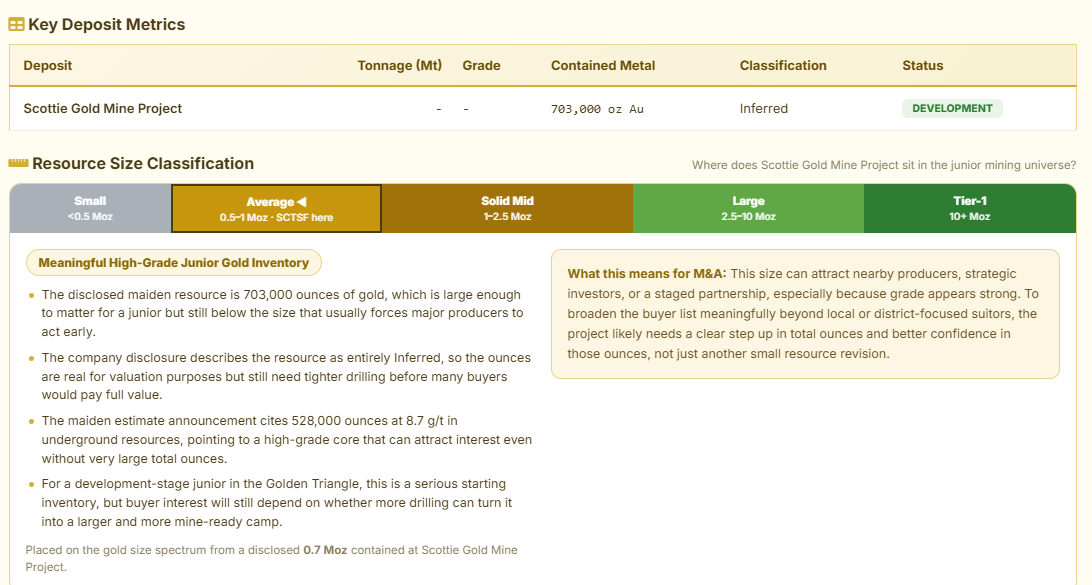
If it treats inferred ounces as if they were reserves, the deposit looks de-risked when it is not.
If it ignores a hedge book, you think you own torque to a rising metal when management already sold a slice of that upside.
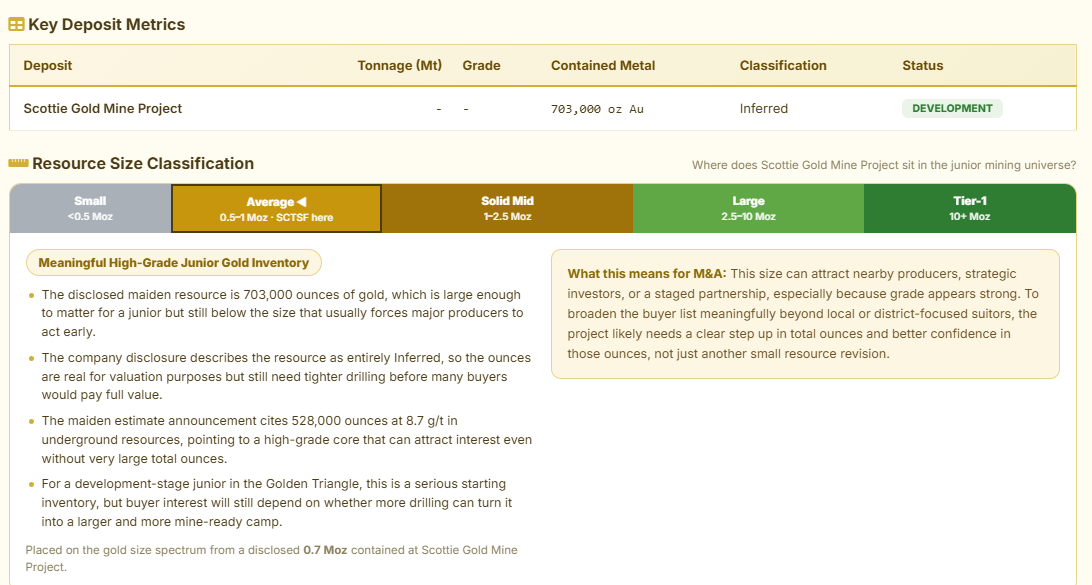
If it repeats promotional language from old interviews, you buy the story that is floating around social media and call it due diligence.
And so on.
Those mistakes do not show up as “A.I. was wrong.” They show up as a portfolio position that never should have been sized that way, if at all. In a mining portfolio, that is how your capital disappears: not in one dramatic blow-up every time, but in a string of names that were never taken apart with real and accurate data in the first place.
A weekend in filings can still leave you unclear. An LLM answer in 15 seconds can leave you confident and unclear. Confidence without source control is the more dangerous of the two.
The great mining investors are not distinguished by finding more stories. They are distinguished by refusing the ones that do not survive a hard first pass, which is how a bull cycle for them can become a 10x or 30x stretch in the account instead of a noisy grind.
Everyone else can sit through the same rising metal cycle and still have a portfolio that languishish behind, because the portfolio was built from answers that felt complete rather than from companies that were actually fit to be held inside the portfolio based on accurate data analysis.
WHAT MINEVANTAGE DOES THAT AN LLM CHAT WINDOW CAN NOT
MineVantage does not start with a prompt. It starts with real data collection. This is so crucial to understand and keep top of mind.
MineVantage reaches the scattered sources, that the LLM’s never do, that actually describe a mining company; filings, technical data, market series, capital-structure information, sentiment that has to be quality-checked, production and study economics when they exist; and it assembles them into the structured report you see.
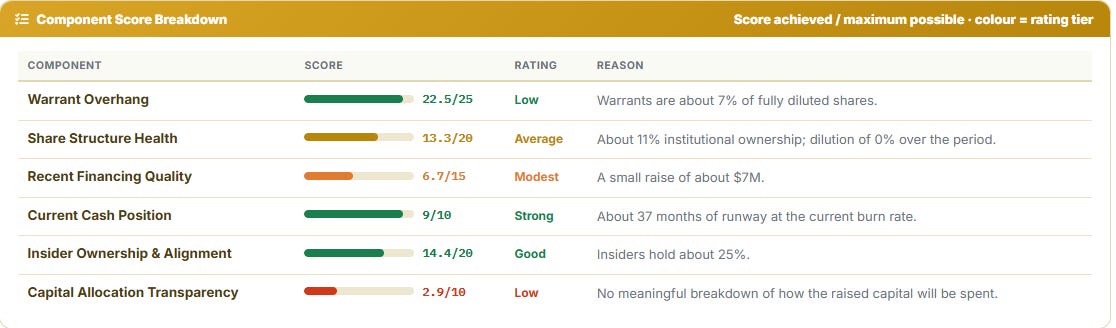
The A.I. layer then works on that assembled record. That is the sequence that matters: real data collection first, structured processes second, interpretation third. That is why the report can show tensions instead of a single cheerful paragraph. But most importantly, shows data pulled from real sources, not confidently fabricated information.
Because it is pulling real data and not phantom or old information, MineVantage can do tasks such as:
Separate social-media heat from project discussion.
Put management quality, treasury, dilution, valuation gaps, metal-cycle context, and milestone progress in one place and make it make sense.
Tell you what has been de-risked and what is still a story.
Give you a first pass on whether the name belongs in the portfolio or is wasting space and capital.
An LLM can summarize. MineVantage is built to decide whether the summary is even standing on the correct numbers. That is also why, for instance, we do not treat a high “positive sentiment” score as a buy signal, and why we do not treat a PEA NPV as cash. The MineVantage product is designed to haircut weak evidence, not to decorate it.
Bottom line: MineVantage is designed to access and acquire the real mining data in order to provide a concrete advantage to mining stock investors who understand and want to find the 1% of investable companies.
THE PRACTICAL DIFFERENCE ON A STOCK YOU ALREADY HOLD
Think about the names already in your account possession.
You do not need another opinion that the metal is interesting.
You need to know whether this company can survive the next year of funding, whether the ounces are the ounces the market thinks they are, whether management has actually advanced the project, and whether the current price still has room if the story is only half true. You need to know facts.
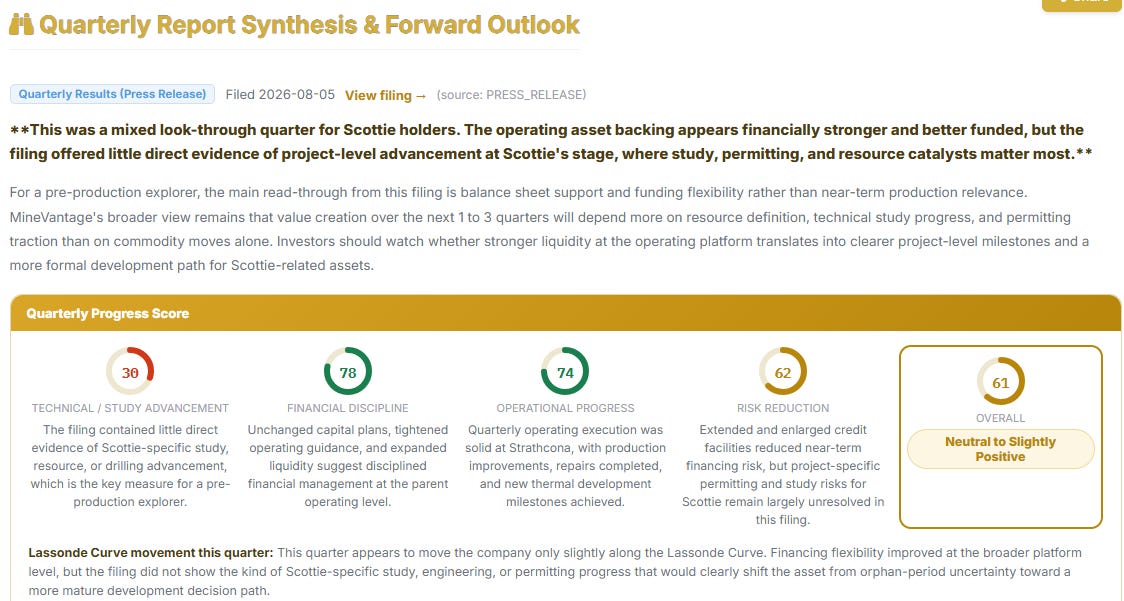
That is real personal portfolio work. It is not entertainment. An LLM chat model is fast at entertainment. It is unreliable at the part that protects and helps to grow your capital. This isn’t a game, this is your future freedom we are talking about.
MineVantage is the Metals and Miners research system for truly understanding the real company and the opportunity: faster than rebuilding the analysis from scratch, stricter than trusting a generated memo or narrative, and built so you can run the same standard again when the story changes.
Run the same stock ticker a 2nd time and MineVantage shows you what changed in the report and with the company progress since the last run. An LLM cannot do that with accuracy across filings, resources, cash, and dilution. MineVantage can, on any mining stock you put through the engine at least twice.
Owning the stock does not retire the homework. It raises the standard, because the next decision is whether to add, hold, trim, or walk away, and that choice only gets cleaner if you can still argue the true bear case with the same facts you used to buy it in the first place.
The practical difference is speed and honesty. A name you already hold will try to talk you into patience. The file, the resource, the cash, and the permit path either still support that patience, or they do not, and you find that out before the market forces you to. You want it to be the former and not the latter.
It’s your capital and it’s your responsibility to protect it! MineVantage is the tool designed to do just that.
THE BETA IS LIVE & IT’S FOUNDERS ONLY
MineVantage BETA is now open. Founders-level Metals and Miners subscribers are already participating. They are picking a mining ticker of their choice, receiving a complete MineVantage report, and informing us of their experience and how the product should be shaped before public launch.
Founders will also receive additional MineVantage benefits as the product moves forward. If you are already a Founder, you should have received the instruction email already. If you do not see it, check the same inbox you use for Metals and Miners.
Once you’ve inputted the ticker symbol and the report has been generated, you will see a screen like this that shows the following accessible links; including the report, the report preamble, and the survey.
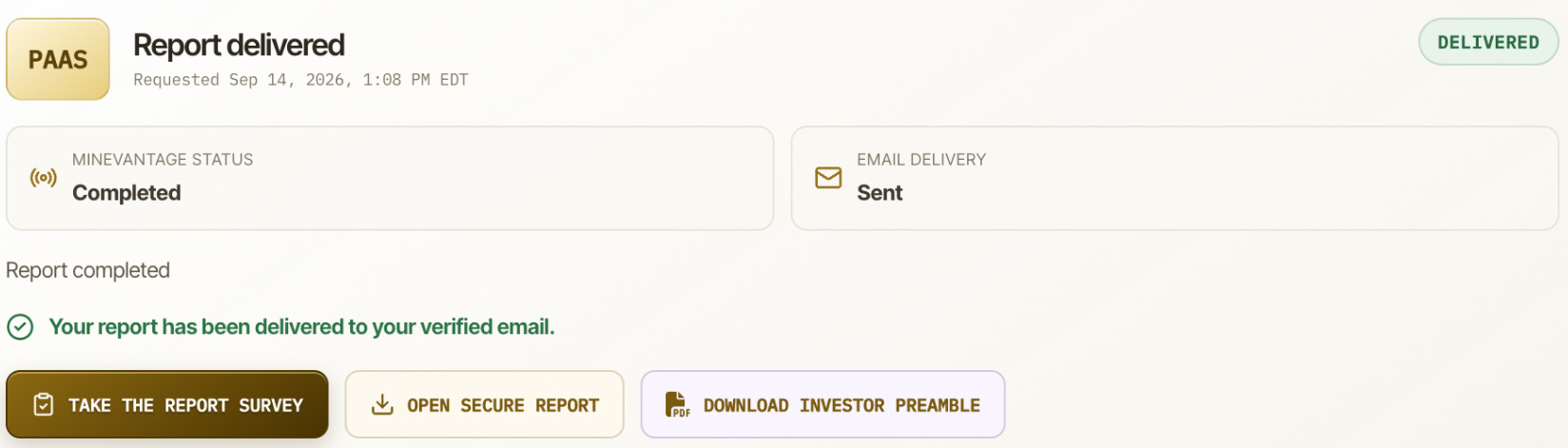
If you are a free, monthly, or annual subscriber, you are not included in this BETA. That is intentional. Founders is the highest Metals and Miners subscription level, and this first window for accessing MineVantage is for this group of dedicated subscribers.
If you want the first under the hood look with real, live and accurate data and not old or contrived information; on a stock you actually care about, for a portfolio you actually have to live with, then upgrade to Founders and join the BETA now: https://metalsandminers.substack.com/subscribe
WHY THIS IS THE MOMENT TO STEP UP
You can keep asking a general LLM model for mining stock answers. Many people will and believe what they are getting is expert-level, up to date, and fully accurate. Some of those answers will be useful as a starting sketch. The problem is that you will not reliably know which parts were fetched and which parts were invented. Your portfolio will find out.
MineVantage exists because mining research cannot be allowed to sit on that ambiguity. The real data has to be collected. The report has to be assembled from that real data. The A.I. has to interpret the record, not replace it. Our precious capital and future depends on this.
If you have ever missed a dilution, trusted a stale ounce count, spent a weekend in documents, bought a story and still could not explain the position cleanly or trust if it is only narrative driven, you already know why this distinction matters. Get the accurate truth, as it is now available.
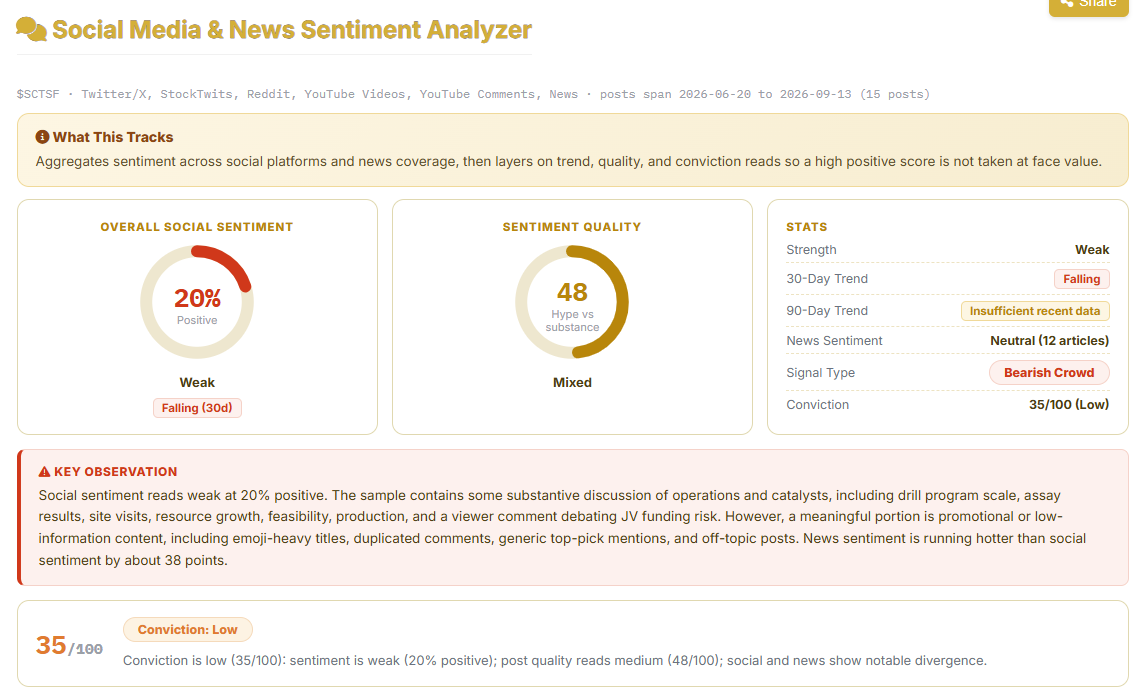
This BETA is the first chance to put that system on a mining stock ticker of your choice and understand the real company and the real data in a strucutred manner designed to help you improve your investment outcomes. Founders get in. Everyone else waits and continues to use shoddy sources or believing in narratives.
Upgrade here to Founders if you want to be in that room: https://metalsandminers.substack.com/subscribe
Best regards,
Gary Bohm, Founder
Metals and Miners
MetalsandMiners.com/MineVantage
Copper producers just admitted they can’t meet demand!
I ran the beta model and like the output report, when to you think it will be available for regular use